The Art of Maturation: How Time Refines the Soul of Jukuseicha熟成の芸術:時間が熟成茶の魂を磨く理由
2026.03.20
In the world of fine beverages, time is the ingredient that cannot be purchased, rushed, or replicated. A great Burgundy needs its cellar years. A single malt requires its decades in oak. And within the quietly evolving world of Japanese tea, a growing number of producers are discovering what the finest wine and spirits makers have always known: that patience, applied with knowledge and intention, transforms good into extraordinary.
Jukuseicha — literally "matured tea" — refers to Japanese teas that have been deliberately aged under controlled conditions after initial processing. The category encompasses a spectrum of approaches: gyokuro rested for six months in sealed paulownia boxes; tencha held through summer and into autumn before being stone-ground into matcha; sencha aged in cool mountain warehouses until its grassy brightness softens into something rounder, sweeter, more amber in both color and character. The common thread is not the tea type but the intention — a maker's deliberate choice to trust time as a collaborator.
The chemistry of tea aging is elegant in its complexity. Freshly processed green tea is dominated by volatile aromatic compounds that give it its characteristic brightness and sometimes astringency. Over time, in the right conditions, these volatiles slowly dissipate or transform. Amino acids interact with reducing sugars through Maillard-adjacent reactions, generating new aromatic molecules. Chlorophylls continue their slow breakdown into pheophytins, shifting the color from vivid green toward warm gold. Catechins partially oxidize and polymerize, reducing bitterness while building body and texture. The result, in the best-aged examples, is a tea of remarkable integration: nothing shouts, everything belongs.
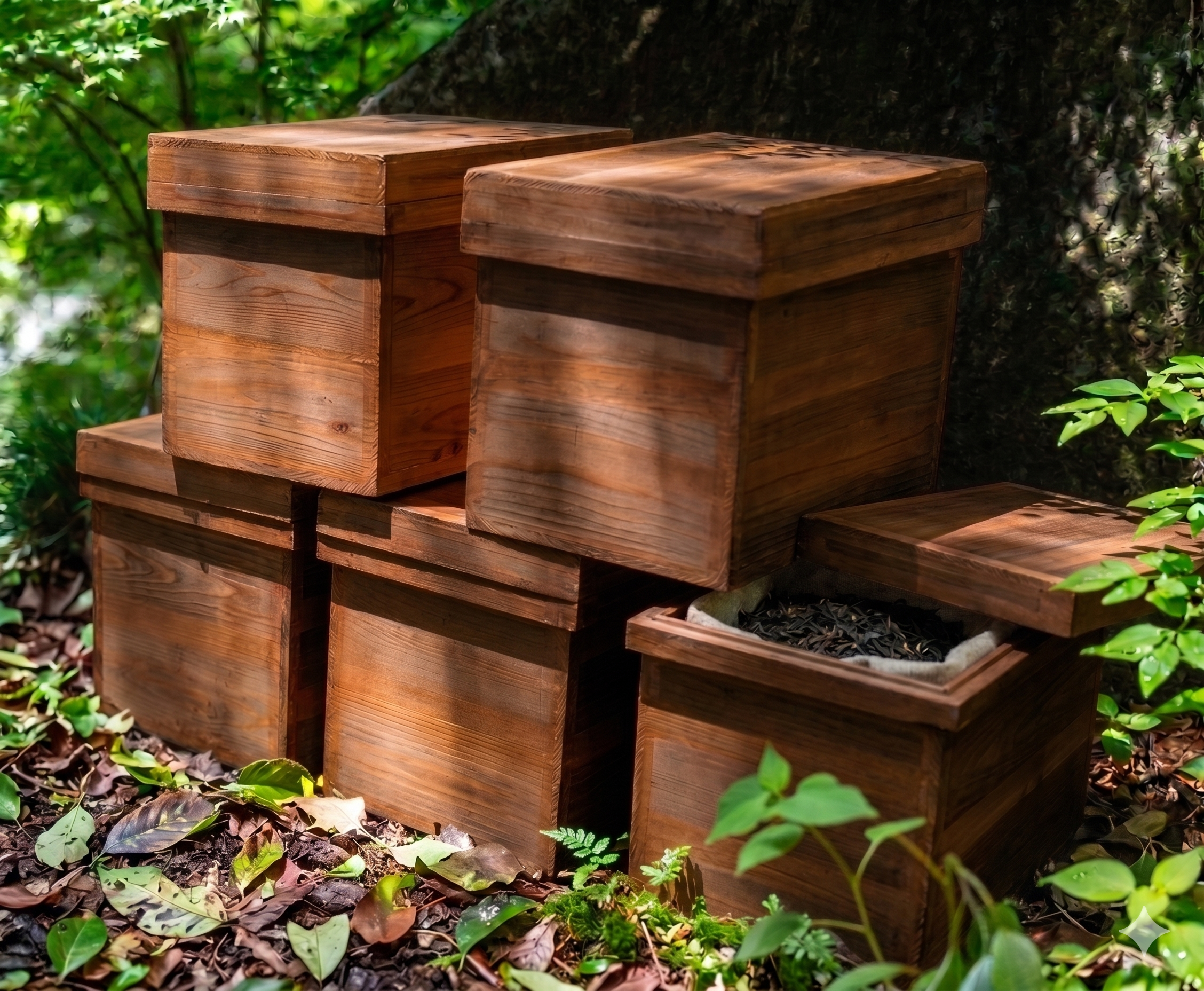
Producers who specialize in jukuseicha speak of each batch as a living thing — something that must be checked, turned, sometimes moved between storage environments as the seasons shift. Cedar and paulownia wood are preferred for storage because their microporous structures allow minimal, beneficial gas exchange while protecting the tea from humidity fluctuations and unwanted odor absorption. Temperature consistency is paramount; even a few degrees of variation across a storage year can alter the aging trajectory significantly.
For the specialty retailer, jukuseicha offers a genuine alternative to the "freshest harvest" narrative that currently dominates Japanese tea export marketing. Here is a product that embraces age, that rewards the question "how long?" with a meaningful answer, that can be priced to reflect genuine craft and genuine time investment. In markets where aged cheese, vintage wine, and cask-matured spirits have already educated consumers about the value of patience, jukuseicha arrives with a story perfectly suited to the moment.
上質な飲み物の世界において、時間とは購入も、急かすことも、再現することもできない唯一の素材です。偉大なブルゴーニュワインはセラーの年月を必要とし、シングルモルトはオーク樽での数十年を必要とします。そして静かに進化する日本茶の世界でも、最良のワインや蒸留酒の造り手が常に知っていたことを発見する生産者が増えています――知識と意図をもって注がれる忍耐が、良いものを卓越したものへと変えるという真実を。
熟成茶とは、初期加工後に意図的・管理された条件のもとで熟成させた日本茶の総称です。そのカテゴリーは多様なアプローチを包含しています。桐箱で半年間静置した玉露、夏を越えて秋まで保管されてから石臼で挽かれる碾茶、涼しい山岳倉庫でゆっくりと青草の明るさがほぐれ、より円やかで甘やかな琥珀色へと変わる煎茶。共通するのは茶の種類ではなく意図――時間を協働者として信頼する、造り手の意識的な選択です。
茶の熟成化学は、その複雑さの中に優雅さがあります。新鮮に加工された緑茶は、特徴的な明るさと時に渋みをもたらす揮発性芳香成分が支配しています。適切な条件下で時間が経つにつれ、これらの揮発成分はゆっくりと散逸・変容します。アミノ酸が還元糖とメイラード反応に類似した経路で作用し、新たな芳香分子を生成します。クロロフィルはフェオフィチンへの分解を続け、色調を鮮やかな緑から温かみのある金色へと移行させます。カテキンが部分的に酸化・重合し、苦みを減らしながらボディとテクスチャーを構築していく。最良の熟成例においてその結果は、驚くほど統合された一杯です――何も主張せず、すべてがそこにあるべくして在る。
熟成茶を専門とする生産者は、各バッチを生き物として語ります――確認し、動かし、季節の移り変わりとともに保管環境を変える必要があるものとして。杉や桐が保管に好まれるのは、その微細孔構造が湿度の変動や不要な臭気の吸収から茶を守りながら、最小限の有益なガス交換を可能にするからです。温度の一貫性は最重要であり、保管期間中のわずか数度の変動でさえ、熟成の軌跡を大きく変えてしまいます。
スペシャルティ小売業者にとって、熟成茶は現在の日本茶輸出マーケティングを支配する「最新収穫」のナラティブに対する、真の代替品を提供します。熟成を讃え、「どれくらいの期間?」という問いに意味ある答えを返し、本物の技と本物の時間への投資を価格に反映できる製品です。熟成チーズ・ヴィンテージワイン・カスク熟成スピリッツによって消費者が忍耐の価値をすでに理解している市場において、熟成茶はまさにその時代に合ったストーリーをもって登場します。