Beyond Green: Exploring the Complex Fermentation Profiles of Hakkocha緑を超えて:発酵茶(茶)の複雑な発酵プロファイルを探る
2026.04.10
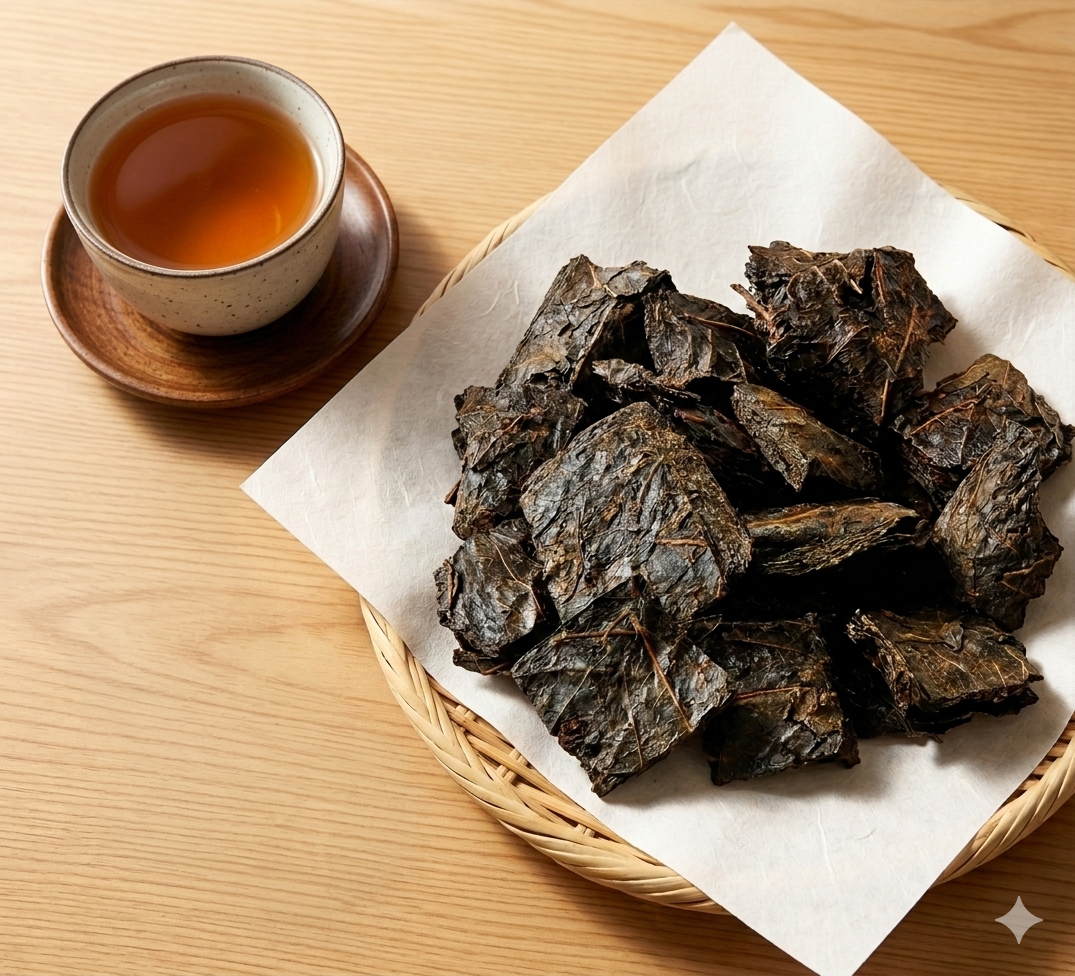
When most people imagine Japanese tea, a vivid palette of greens comes to mind — the bright vegetal intensity of sencha, the umami-laden depth of gyokuro, the brilliant jade powder of matcha. Japan has built its global tea reputation on these unoxidized masterworks, and rightfully so. Yet tucked quietly at the edges of this tradition lies a category that challenges every assumption: hakkocha, Japan's fermented tea.
Unlike green teas, which are steamed or pan-fired immediately after harvest to arrest oxidation and preserve the leaf's original chemistry, hakkocha undergoes a deliberate and extended microbial transformation. Bacteria, wild yeasts, and fungi are invited into the process — sometimes through direct inoculation, sometimes through the natural microbial ecology of the production environment — and over weeks or months, they systematically dismantle and rebuild the leaf's chemical architecture. Chlorophylls break down. Catechins transform into theabrownins and other complex polyphenols. Volatile aromatic compounds multiply and deepen. What emerges from this invisible fermentation is a tea that bears almost no sensory resemblance to its green counterpart: earthy, woody, mellow, sometimes reminiscent of aged Pu-erh, yet unmistakably Japanese in its quietness and restraint.
The most celebrated examples of hakkocha come from Kochi Prefecture — particularly the ancient goishi-cha tradition, in which tea leaves are piled, weighted, and left to ferment in a two-stage process that locals have practiced for centuries. The resulting cakes carry a gentle sourness, a mossy depth, and a mineral finish that rewards slow, contemplative sipping. But regional variations exist across Tokushima, Ehime, and even parts of Shizuoka, each reflecting local microbial terroir in ways that make comparative tasting genuinely revelatory.
From a health perspective, the fermentation process generates a suite of bioactive compounds — post-biotic metabolites, transformed polyphenols, B vitamins produced by microbial activity — that are simply absent in unfermented teas. Caffeine levels are substantially lower. The brew is gentle on the stomach and, according to emerging Japanese research, may support gut microbiome diversity in ways analogous to other traditionally fermented foods.
For the specialty tea importer or retailer seeking something genuinely rare — a product with deep cultural roots, a compelling origin story, and a flavor profile that stands entirely apart from anything the mainstream market currently offers — hakkocha represents one of Japan's great undiscovered export opportunities. The category is small, supply is limited, and the producers who maintain traditional methods are dwindling. That scarcity, handled with care, is precisely what makes it precious.
日本茶と聞いて多くの人が思い浮かべるのは、煎茶の鮮やかな緑、玉露の濃厚な旨味、抹茶の鮮烈なヒスイ色といった、非酸化茶の世界でしょう。日本はそれらの傑作によって世界的な茶の評判を築いてきました。しかし、その伝統の静かな外縁に、すべての常識を覆すカテゴリーが息づいています――発酵茶「碁石茶」をはじめとする、日本の発酵茶です。
摘採後すぐに蒸熱や釜炒りで酸化を止める煎茶とは対照的に、発酵茶は意図的・長期的な微生物変容のプロセスを経ます。細菌・野生酵母・菌類が――直接接種によって、あるいは製造環境の自然な微生物生態系を通じて――プロセスに招き入れられ、数週間から数ヶ月かけて葉の化学構造を解体・再構築していきます。クロロフィルが分解され、カテキンがテアブロウニンや複雑なポリフェノールへと変容し、揮発性芳香成分が増殖・深化する。この見えない発酵から生まれるのは、土のような、木のような、まろやかな香味を持つ一杯です。プーアル茶を思わせる深みがありながら、その静けさと抑制には、紛れもなく日本の精神が宿っています。
発酵茶の最高峰として知られるのは高知県産のもの――とりわけ「碁石茶」の伝統です。茶葉を積み重ね、重しをして二段階の発酵を行うこの製法は、地元の人々が何世紀にもわたって受け継いできたものです。できあがった茶は、穏やかな酸味、苔むしたような深み、そしてミネラルを感じる余韻を持ち、ゆっくりと時間をかけて向き合うほどにその豊かさが増します。徳島・愛媛・静岡の一部にも地域ごとの変種があり、それぞれの微生物テロワールを反映した比較テイスティングは、本当に啓示的な体験をもたらします。
健康面では、発酵プロセスによってポストバイオティクス代謝産物・変容したポリフェノール・微生物活動で生成されるビタミンB群など、非発酵茶には存在しない生理活性成分が生まれます。カフェイン含量は大幅に低く、胃への負担が少なく、腸内フローラの多様性を支える可能性を示す日本の研究も出始めています。
本物の希少性を求めるスペシャルティ茶のインポーターや小売業者にとって――深い文化的ルーツ、compelling な産地ストーリー、そして主流市場に存在しない全く異なる風味プロファイルを持つ製品を探しているすべての人にとって――発酵茶は日本の偉大な未発掘輸出品のひとつです。カテゴリー規模は小さく、供給は限られており、伝統的な製法を守る生産者は減り続けています。その希少性こそが、丁寧に扱われたとき、この茶を真に貴重なものにするのです。