Shade, Silence, and Umami: The Extraordinary Botany of Gyokuro影、静けさ、そして旨味:玉露の驚異的な植物学
2026.01.20
There is a moment, approximately three weeks before the first harvest of spring, when the gyokuro farmer makes a decision that will define everything that follows. The nets go up. The light disappears. And in that enforced darkness, the tea plant begins one of the most remarkable transformations in the botanical world.
Gyokuro — literally "jade dew" — is defined entirely by this shading process. Under nets that reduce sunlight exposure by 70 to 90 percent for three to four weeks before harvest, the tea plant responds to the sudden darkness by accelerating its production of chlorophyll and theanine, the amino acid responsible for the tea's characteristic umami sweetness and its calming, focus-enhancing neurochemical effects. Simultaneously, the plant slows its conversion of theanine into catechins — the compounds that would otherwise generate bitterness. The result is a tea that is chemically inverted compared to standard green tea: high in amino acids, low in catechins, intense in colour, and utterly unlike anything the plant produces when grown in open sunlight.
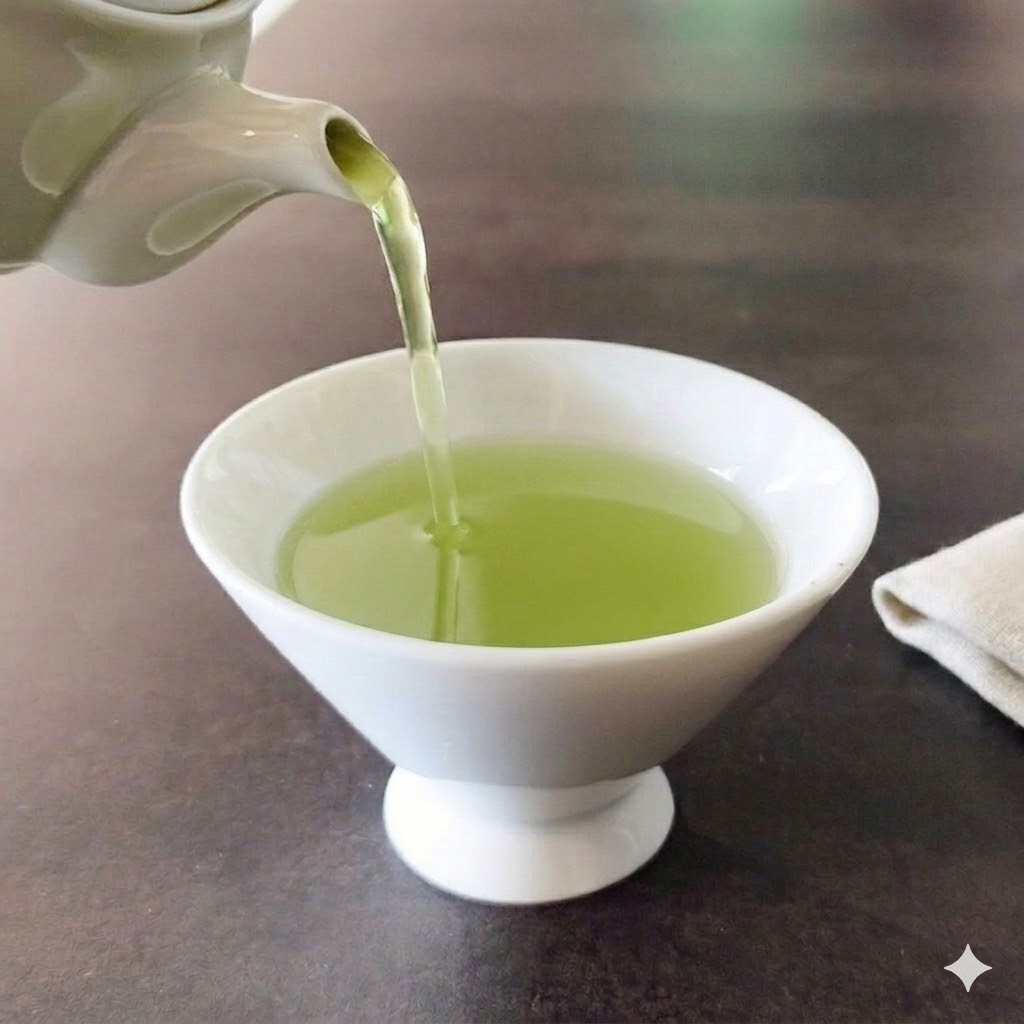
The flavour profile that emerges from this process is one of the most complex in the tea world. Gyokuro carries a deep oceanic quality — reminiscent of nori, of dashi, of the sea — alongside a sweetness that lingers long after the cup is empty. The colour is extraordinary: a vivid, saturated green that speaks directly to the chlorophyll concentration and gives the tea its name. A skilled producer can achieve a brew so thick with dissolved compounds that it has the viscosity of a light broth.
Brewing gyokuro correctly is a discipline in itself. Lower water temperature — typically 50 to 60 degrees Celsius — is essential to prevent the heat from volatilising the delicate aromatic compounds and triggering the bitterness that higher temperatures would extract. Longer steeping times compensate for the cooler water. The process demands attention, but the reward is proportional: in the cup, a well-brewed gyokuro is arguably the most sophisticated expression of the tea plant that exists anywhere in the world.
For the international buyer entering the specialty tea market, gyokuro represents both an opportunity and a responsibility. Its production is labour-intensive, its supply genuinely limited, and its quality highly variable across producers and gardens. Understanding what separates exceptional gyokuro from merely competent gyokuro — shading duration, harvest timing, cultivar selection, processing precision — is what allows a retailer to tell the story with confidence, and to price the product in a way that reflects its true worth.
春の一番茶の収穫からおよそ3週間前、玉露農家はその後のすべてを決定する選択をします。遮光ネットを張る。光を遮断する。そして強制された闇の中で、茶の木は植物界でも最も驚くべき変容のひとつを始めるのです。
玉露――文字通り「翡翠の露」――はこの覆下栽培プロセスによってすべてが定義されます。収穫前の3〜4週間、日光を70〜90%遮断するネットの下で、茶の木は突然の暗さに反応し、クロロフィルとテアニンの生産を加速させます。テアニンとは、玉露特有の旨味の甘さと、穏やかで集中力を高める神経化学的効果をもたらすアミノ酸です。同時に、植物はテアニンをカテキン――渋みの原因となる成分――に変換するプロセスを遅らせます。結果として生まれるのは、化学的に通常の緑茶とは逆転した茶です。アミノ酸が豊富で、カテキンが少なく、色が濃く、露地栽培では決して生まれない一杯。
このプロセスから生まれる風味プロファイルは、茶の世界でも最も複雑なものの一つです。玉露は深い海の香りを持ちます――海苔、出汁、海を連想させる香味、そして飲み干した後も長く残る甘み。その色は驚異的です。クロロフィルの濃度を直接物語る、鮮やかで彩度の高い緑。熟練した生産者は、溶解した成分が軽いブロス状の粘度を持つほど濃厚な一杯を生み出すことができます。
玉露を正しく淹れることは、それ自体がひとつの修練です。通常50〜60度という低温のお湯が不可欠です。高温は繊細な芳香成分を揮発させ、渋みを引き出してしまうからです。低温を補うために浸出時間を長くします。このプロセスは細心の注意を要しますが、その報酬は相応のものです。正しく淹れた玉露の一杯は、世界に存在するあらゆる茶の中で最も洗練された表現と言えるでしょう。
スペシャルティ茶市場に参入する海外バイヤーにとって、玉露は機会であると同時に責任でもあります。その製造は労働集約的で、供給は本当に限られており、生産者と茶園によって品質は大きく異なります。卓越した玉露と単に有能な玉露を区別するもの――覆下日数・収穫タイミング・品種選択・加工精度――を理解することが、小売業者が自信を持ってそのストーリーを語り、真の価値を反映した価格設定を行うことを可能にします。