The Last Mile of Craft: How Packaging Determines Whether Premium Tea Survives Its Journey工芸のラストマイル:パッケージングがプレミアムティーの品質をいかに守るか
2026.05.08
A tea farmer in Uji may spend an entire year preparing for a harvest window of ten days. The decisions made in that window — the timing of picking, the precision of steaming, the temperature of the drying room — can make the difference between an exceptional tea and an ordinary one. All of that work, all of that accumulated craft, can be undone in a matter of weeks by a single failure downstream: inadequate packaging.
Green tea is, chemically speaking, an unstable product. Its defining compounds — the chlorophylls that give it colour, the amino acids that give it sweetness, the volatile aromatic molecules that give it fragrance — are all susceptible to degradation through exposure to four primary enemies: oxygen, moisture, light, and heat. In Japan, where tea is typically consumed within months of production and where distribution chains are short and climate-controlled, these enemies are manageable. In international export, where a tea may spend weeks in transit, sit in a distribution warehouse, and ultimately live on a retail shelf for months, they become existential threats to quality.
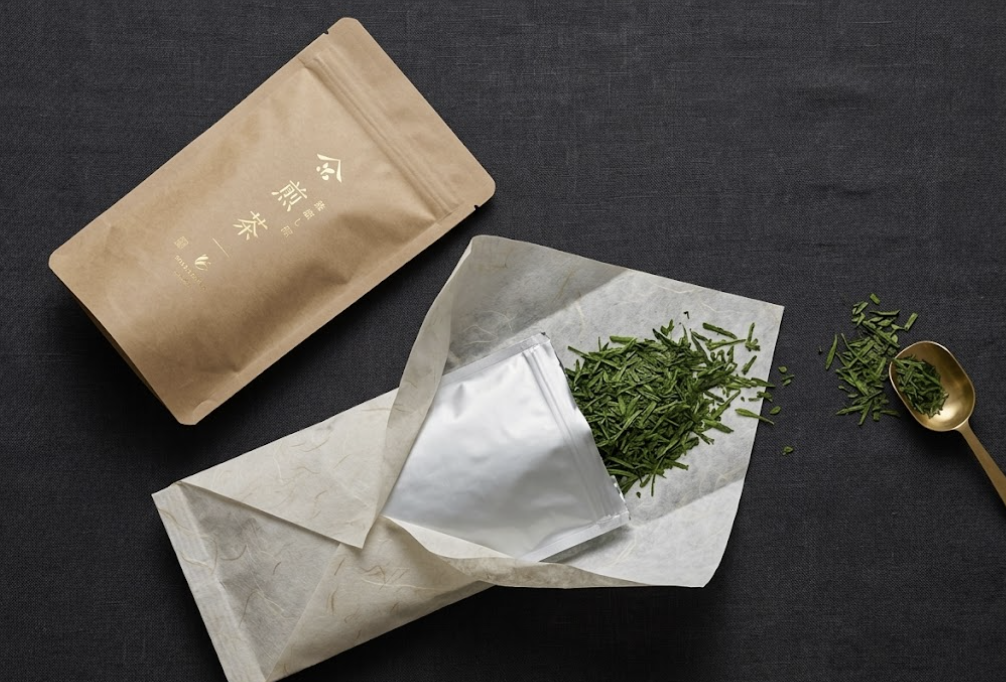
The standard for premium Japanese tea export packaging is well established, if not universally applied. Nitrogen flushing — displacing the oxygen inside a sealed package with inert nitrogen gas — is the most effective intervention, extending the shelf life of green tea from a matter of months to over a year without meaningful quality loss. Foil laminate inner bags provide the moisture and light barrier that paper alone cannot. Resealable outer packaging with a one-way degassing valve allows the tea to off-gas naturally after sealing without allowing oxygen to re-enter. These are not luxuries for premium products — they are the minimum standard for delivering what the producer created.
Beyond function, packaging for premium Japanese tea export carries an additional obligation: it must communicate quality before the consumer ever opens the seal. In international specialty markets — whether a boutique tea shop in Berlin, a luxury hotel amenity programme in Dubai, or a gourmet retail chain in New York — the package is the first and often decisive impression. The visual language of Japanese craft — restrained typography, natural materials, hand-stamped washi paper, the visual quietness that communicates confidence rather than shouting for attention — translates with remarkable consistency across cultures, and premium buyers have learned to read it as a reliable signal of what lies inside.
The conversation between protection and presentation — between the engineering requirements of a product that must survive a six-week journey in variable conditions and the aesthetic requirements of a product that must justify a premium price point on a retail shelf — is one that every serious Japanese tea exporter must navigate with care. Getting it right is the final act of craft in a process that began in the garden.
宇治の茶農家は、10日間の収穫期のために一年中準備を重ねているかもしれません。その期間に下される決断――摘採のタイミング、蒸しの精度、乾燥室の温度――が卓越した茶と平凡な茶の違いをもたらします。そのすべての労働、蓄積されたすべての技が、下流での単一の失敗によって数週間で無駄になり得ます。それが不適切なパッケージングです。
緑茶は化学的に言えば不安定な製品です。その特徴的な成分――色を与えるクロロフィル、甘みを与えるアミノ酸、香りを与える揮発性芳香分子――はすべて、4つの主要な敵への暴露による劣化に敏感です。酸素・水分・光・熱です。日本では、茶は通常生産から数ヶ月以内に消費され、流通チェーンは短く温度管理されているため、これらの敵は管理可能です。国際輸出では、茶が数週間の輸送を経て、流通倉庫に保管され、最終的に小売棚に数ヶ月置かれる可能性がある中、これらは品質への実存的な脅威となります。
プレミアム日本茶輸出包装の基準は確立されています。窒素充填――密封パッケージ内の酸素を不活性窒素ガスで置き換える――は最も効果的な介入であり、緑茶の賞味期限を数ヶ月から品質損失なしに1年以上に延長します。アルミ箔ラミネート内袋は、紙単独では提供できない水分と光のバリアを提供します。一方向脱気バルブ付きの再封可能な外装包装は、酸素の再侵入を許すことなく、封入後に茶が自然にガスを放出することを可能にします。これらはプレミアム製品への贅沢品ではなく――生産者が創り出したものを届けるための最低基準です。
機能を超えて、プレミアム日本茶輸出包装には追加の義務があります。消費者がシールを開ける前に品質を伝えなければなりません。国際スペシャルティ市場では――ベルリンのブティック茶店、ドバイの高級ホテルアメニティプログラム、ニューヨークのグルメ小売チェーンのいずれでも――パッケージは最初の、そしてしばしば決定的な印象です。日本の工芸の視覚言語――抑制された組版、自然素材、手押しの和紙、注目を叫ぶのではなく自信を伝える視覚的な静けさ――は文化を超えて際立った一貫性で伝わり、プレミアムバイヤーはそれを内側にあるものの信頼できるシグナルとして読み取ることを学んでいます。
保護とプレゼンテーションの対話――変動する条件下での6週間の旅を生き延びなければならない製品の工学的要件と、小売棚でプレミアム価格を正当化しなければならない製品の美的要件の間の――は、すべての真剣な日本茶輸出業者が注意深く航行しなければならないものです。それを正しく行うことは、茶園で始まったプロセスの最後の工芸行為です。