The Science of Kyobancha: Molecular Chemistry of Smoky Perfection京番茶の科学:スモーキーな完璧さを生む分子化学
2026.02.15
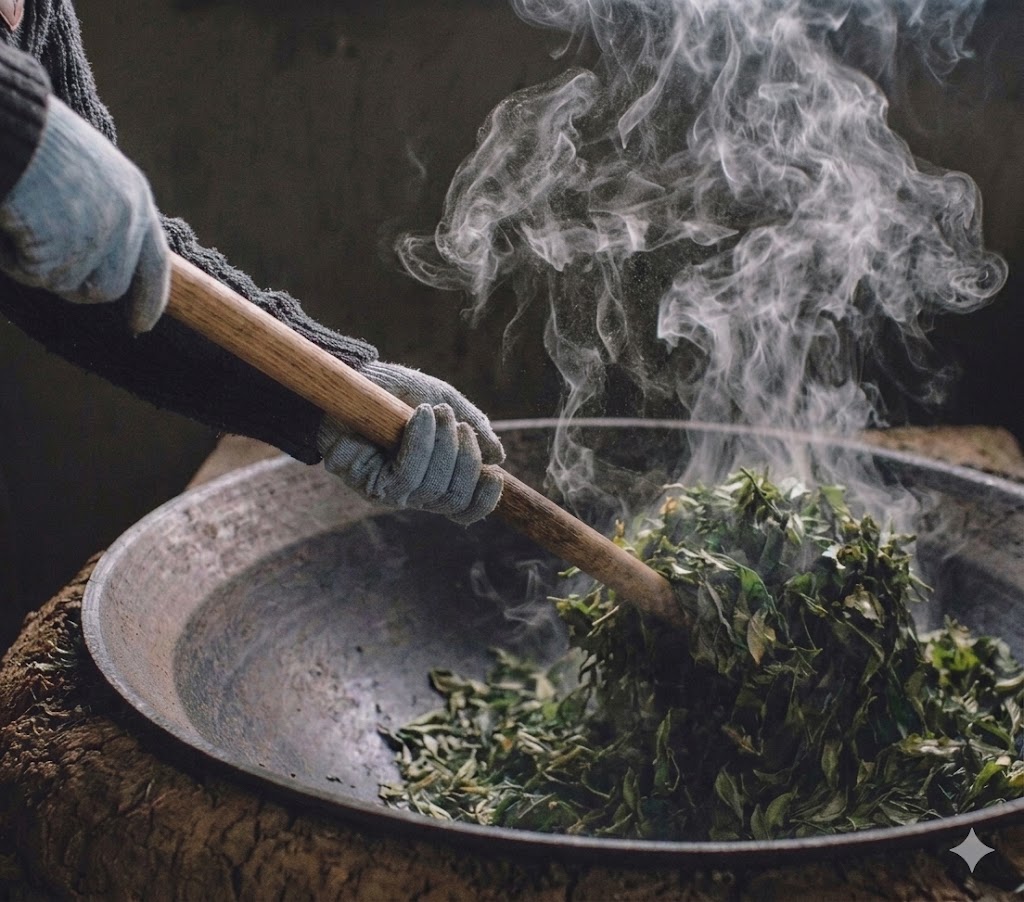
Every tea tradition has its paradox — a tea that succeeds precisely because it breaks the rules the tradition is famous for. In Japan, that paradox is kyobancha. Made from the large, mature leaves and woody stems that would otherwise be discarded after the premium spring harvest, it is the tea that Kyoto's households have been reaching for after dinner for generations, prized not despite its rustic origins but because of them.
The production of kyobancha begins where other teas end. After the coveted first and second flushes have been harvested and processed into gyokuro, tencha, and sencha, the remaining late-season leaves and stems — coarser, more fibrous, less chemically complex — are gathered and subjected to an intense, high-temperature roasting. The heat is not gentle. Temperatures reach levels where standard green tea chemistry is simply overwritten: chlorophyll degrades entirely, most catechins and amino acids are thermally transformed or destroyed, and an entirely new suite of Maillard reaction products takes their place.
The chemistry of this transformation is what makes kyobancha analytically fascinating. The high-heat roasting generates significant concentrations of pyrazines — the same family of compounds responsible for the aroma of roasted coffee and dark chocolate — alongside furans, thiazoles, and a range of lignin-derived phenolic compounds that emerge from the breakdown of the stems' woody cell walls. The cumulative effect is a flavor profile that is simultaneously smoky, roasted, camphoraceous, and faintly sweet: assertive enough to cut through a rich meal, yet clean and dry on the finish.
From a nutritional standpoint, kyobancha occupies a unique position among Japanese teas. Its caffeine content is exceptionally low — often below 10mg per cup compared to 30–60mg in sencha — making it genuinely suitable for children, the elderly, and anyone with caffeine sensitivity. Its conventional catechin content is dramatically reduced by the roasting process, but emerging research from Kyoto University and other institutions suggests that the tea's unique phenolic profile may carry distinct bioactive properties of its own, including potential effects on lipid metabolism and blood glucose regulation.
In global export markets, kyobancha arrives at a moment of considerable opportunity. Consumers who have been educated by Lapsang Souchong — the famous Chinese smoked tea — about the appeal of smoke as a flavor dimension are primed for a Japanese interpretation that is drier, cleaner, and more nuanced. The tea's naturally low caffeine profile positions it perfectly within the wellness category. And its story — the tea made from what would otherwise be waste, the tea that Kyoto grandmothers have served for centuries, the tea that tastes of fire and craft — is exactly the kind of narrative that resonates in a specialty food market hungry for authenticity.
あらゆる茶の伝統には逆説があります――その伝統が有名なルールをまさに破ることで成功する茶が存在します。日本において、その逆説が京番茶です。高級な春の一番茶・二番茶の収穫後に廃棄されるはずだった大きな成熟葉と茎を原料とし、それでも京都の家庭が何世代にもわたって夕食後に求め続けてきた茶――その素朴な起源にもかかわらずではなく、その起源ゆえに珍重されてきた一杯です。
京番茶の製造は、他の茶が終わるところから始まります。玉露・碾茶・煎茶に加工されるための一番茶・二番茶が収穫・製造された後、残った晩期の葉と茎――より粗く、繊維質で、化学的に複雑でない部分――が集められ、高温の焙煎にかけられます。その熱は穏やかなものではありません。温度は、標準的な緑茶の化学成分が文字通り上書きされるレベルに達します。クロロフィルは完全に分解し、カテキンとアミノ酸のほとんどが熱変性・分解され、代わりにメイラード反応産物の全く新しいスペクトルが生まれます。
この変容の化学こそが、京番茶を分析的に魅力的にする要素です。高温焙煎によって大量のピラジン類が生成されます――ロースト珈琲やダークチョコレートの香りを担うのと同じ化合物群です。それに加え、フラン・チアゾール、そして茎の木質細胞壁の分解から生まれるリグニン由来のフェノール化合物群が生成されます。その累積効果は、煙のような・焦げたような・樟脳のような・かすかに甘いという、独特の風味プロファイルです。豊かな食事を切り裂くほどの存在感を持ちながら、後味はクリーンでドライです。
栄養面では、京番茶は日本茶の中でも独自の地位を占めています。カフェイン含量は極めて低く――煎茶の30〜60mgに対し、多くの場合1杯あたり10mg以下――子ども・高齢者・カフェインに敏感な方に本当の意味で適しています。通常のカテキン含量は焙煎プロセスで劇的に減少しますが、京都大学などの新興研究では、この茶独自のフェノール成分プロファイルが脂質代謝や血糖調節への潜在的効果を含む、独自の生理活性特性を持つ可能性が示唆されています。
世界の輸出市場において、京番茶はかなりの機会を持って登場しています。正山小種(ラプサンスーチョン)によってスモーキーフレーバーの魅力を学んだ消費者は、より乾いて・クリーンで・ニュアンスに富む日本版の解釈を受け入れる準備ができています。低カフェインのプロファイルはウェルネスカテゴリーに完璧にはまります。そしてそのストーリー――廃棄されるはずだった素材から生まれた茶、京都のおばあさんたちが何世紀も食卓に供してきた茶、火と職人技の味がする茶――は、本物を渇望するスペシャルティ食品市場に深く響く、まさにそのようなナラティブです。